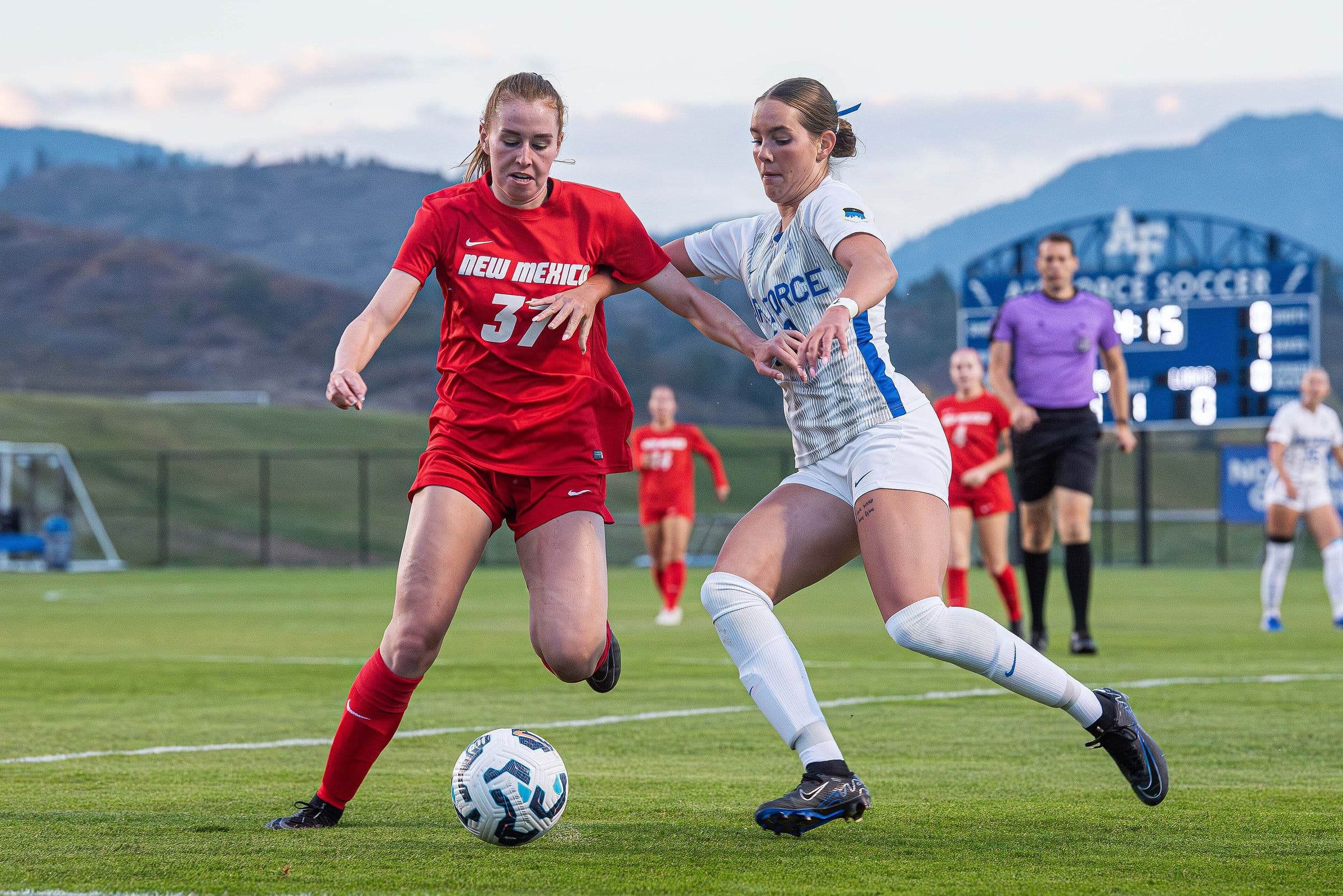
Changing colleges
The college soccer transfer portal: dates and rules
The short answer
A Division I soccer player may give notice of transfer in two windows in 2026-27: November 23 to December 22, 2026, and May 1 to May 15, 2027. Division II and Division III players may give notice at any time. In every NCAA division the player tells their own college in writing, the college enters them in the portal, and only then may other coaches make contact. The NAIA has no portal: a contacted NAIA college notifies the player’s current one.
Sources last checked
| Division I, first window | November 23 to December 22, 2026 |
|---|---|
| Division I, second window | May 1 to May 15, 2027 |
| Division II | At any time; entered in the portal within seven days |
| Division III | At any time, or a 30 days self-release to another Division III college |
| NAIA | No portal; the contacted college notifies the current one within 10 days |
| Transfers we can see on current rosters | At least 4,629 |
When is the transfer portal open for Division I soccer?
| Window | Dates | The rule |
|---|---|---|
| After the season | November 23 to December 22, 2026 | A 30-day period beginning seven days after the championship field is selected |
| Spring | May 1 to May 15, 2027 | May 1 to 15 |
Bylaw 13.1.1.4.1(a); dates from the NCAA’s Figure 13-1.
The window is when a player may give notice. The bylaw sets no date by which a player already in the portal must choose a college. Outside the windows, an undergraduate Division I soccer player may not start the process unless an exception applies.
How do you enter the transfer portal?
- Tell your own college, in writing. The process starts with a written notification of transfer to the player’s own college, and an educational module about transferring (Bylaw 13.1.1.4.1).
- Your college enters you. A Division I college must put the player in the national transfer database within two business days; a Division II college within seven days (Bylaw 13.1.1.3.1).
- Other coaches may now contact you. Before that, they may not.
- You contact them too. Do not wait to be found: write to the programs that fit, with film.
The rule the portal exists for: a Division I coach may not contact a player at another Division I college, or anyone connected to them, before the player has gone through the notification of transfer process (Bylaw 13.1.1.4). A coach who talks to you before you are in the portal is breaking it, and so are go-betweens acting for them.
How do the transfer rules differ in D2, D3 and the NAIA?
| Level | When a player may give notice | What happens next | Where it is written |
|---|---|---|---|
| Division I | When a player may give noticeIn a window: a 30-day period beginning seven days after the championship field is selected, or May 1 to 15 | What happens nextThe college enters the player in the portal within two business days | Where it is writtenBylaw 13.1.1.4.1(a) |
| Division II | When a player may give noticeAt any time | What happens nextThe college enters the player in the portal within seven days | Where it is writtenBylaw 13.1.1.3.1 |
| Division III | When a player may give noticeAt any time | What happens nextOr the player may give another Division III college a self-release, good for 30 days | Where it is writtenBylaw 13.1.1.2.1; Bylaw 13.1.1.2.2 |
| NAIA | When a player may give noticeNo window | What happens nextIf a player at one NAIA college contacts another, that college must notify the player’s current college in writing within 10 days, and may reply only after it has | Where it is writtenArticle II, Section D |
Moving between associations follows the rule of the college the player is leaving: a Division I coach must follow that player’s own division’s rule, or the NAIA’s, before making contact (Bylaw 13.1.1.4).
What should a player check before entering the portal?
- Your scholarship. Ask your compliance office, before you give notice, what happens to your athletic aid once you are in the portal and whether you could come back.
- Your credits. Ask the new college’s registrar which credits transfer toward your degree, not only whether they are accepted.
- Your eligibility. Ask the new college’s compliance office whether you could play next season and what you must pass this term for that.
- Room. Read the new program’s roster by class and position the same way a high school recruit would.
How many college soccer players transfer?
On the rosters we hold, at least 4,629 players arrived from another college. That is a floor: we can only count a transfer when the roster names the previous college. By the level of the program they joined, the share of readable roster entries that are transfers is at least 14.1% in the NAIA, 9.2% in D2, 6.9% in D1, 4.4% in D3.
At least 67% of programs list at least one transfer. Which programs sign many, and why that matters, is in the transfer portal, in numbers.
What should a transfer do in the first week?
- Before you give notice, have film from college matches cut and a one-page profile ready.
- Build a list of programs at a level you have shown you can play, with room at your position.
- The day you are in the portal, write to those coaches yourself: what you played, your minutes, your grades, your film, and when you can enroll.
- Follow up once after a week.
The email itself: how to email college soccer coaches. Our transfer track is built for this search.
Quick answers
- When does the transfer portal open for college soccer?
- For Division I in 2026-27: November 23 to December 22, 2026, and May 1 to May 15, 2027. Division II and III players may give notice at any time.
- How long is the soccer transfer window?
- In Division I, a 30-day period beginning seven days after the championship field is selected, or May 1 to 15 (Bylaw 13.1.1.4.1(a)).
- Can a coach contact you before you are in the portal?
- No. A Division I coach may not contact a player at another Division I college, or anyone connected to them, before the player has gone through the notification of transfer process (Bylaw 13.1.1.4).
- Is there a transfer portal in D3?
- Yes. A Division III player may give written notice at any time and be entered in the portal, or may give another Division III college a self-release that allows contact for 30 days (Bylaw 13.1.1.2.2).
- Does the NAIA use the transfer portal?
- No. If a player enrolled at one NAIA college contacts another, that college must notify the current one in writing within 10 days (Article II, Section D).
How this was counted
Dates and rules are quoted from the NCAA’s 2026-27 manuals and its notification-of-transfer windows, and from the NAIA Official Handbook. Transfer counts are players whose roster entry names a previous college, on the rosters we hold; they are floors, last measured on 2026-10-06.
Sources
- NCAA Division I notification-of-transfer windows, 2026-27 ↗
- NCAA Division I Manual, 2026-27 (Legislative Services Database) ↗
- NCAA Division II Manual, 2026-27 (Legislative Services Database) ↗
- NCAA Division III Manual, 2026-27 (Legislative Services Database) ↗
- NAIA Official Handbook, 2026-2027 ↗
- Startline: transfers we can see on the rosters we hold
Last checked against these sources on. Figures marked Startline are counted from the data we hold and move when it does. Rules change: check anything dated against the governing body itself.
See programs scored for a sample player
The demo’s fit screen scores level and room at each program for a sample player.
The demo is the real product with a sample player in it. No account, no card, and nothing you do in it is charged or sent.