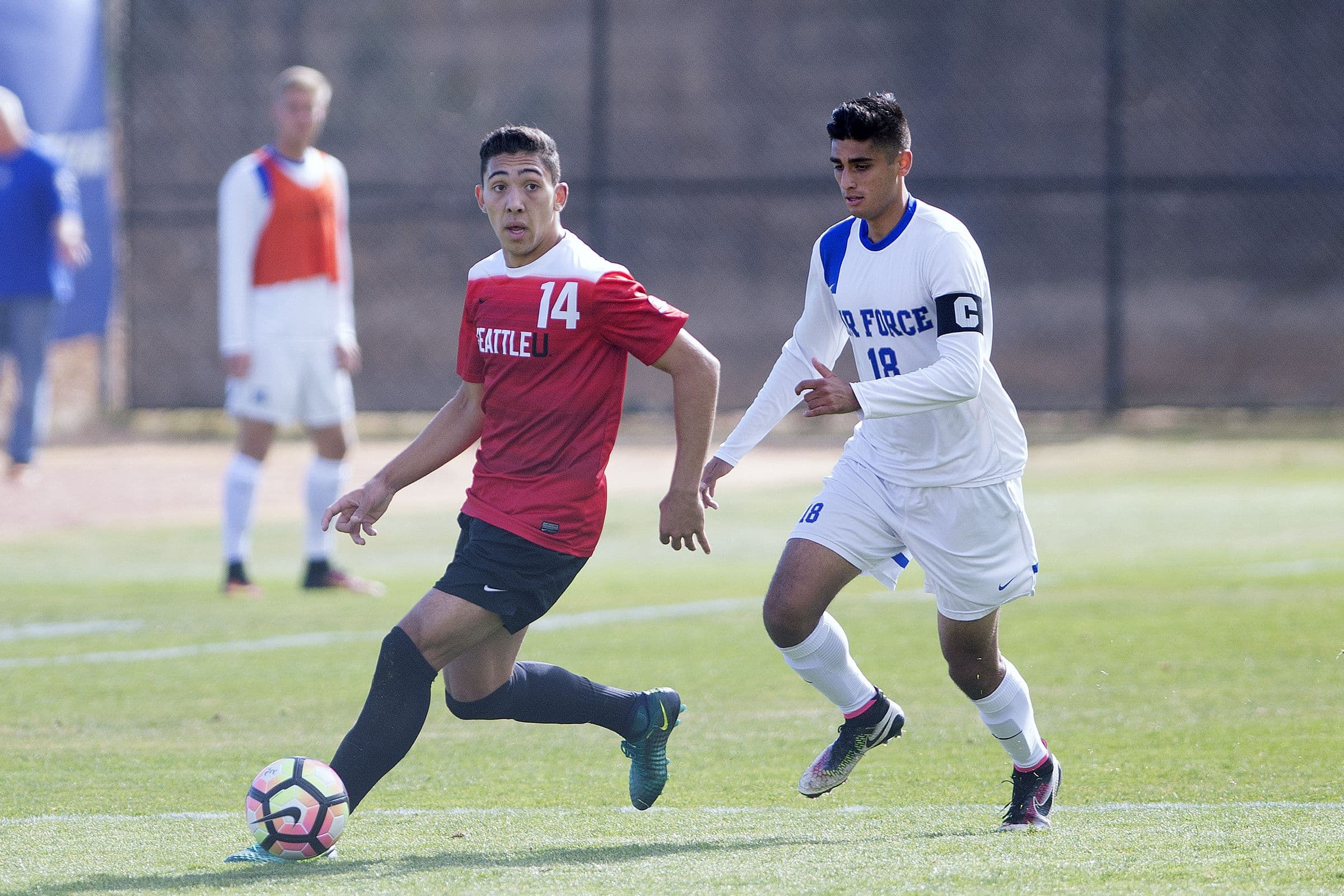
The whole process
How to get recruited for college soccer
The short answer
You get recruited by contacting coaches yourself. Pick programs that fit your level and grades, send each coach a short email with a highlight video, and follow up. An NCAA Division I coach can reply from June 15 after sophomore year; Division II, Division III and NAIA coaches can reply sooner. There are 2,215 college soccer programs, so the list you start with matters most.
Sources last checked
| College soccer programs | 2,215 (1,212 women’s, 1,003 men’s) |
|---|---|
| Who makes the first move | The player, by email |
| Division I coaches can call or message from | June 15 after sophomore year (Bylaws 13.1.3.1 and 13.4.1) |
| Division II coaches can message | at any time (Bylaw 13.1.3.1) |
| Division III coaches can send materials | at any time (Bylaw 13.4.1) |
| NAIA | no set start date: the NAIA handbook has no recruiting calendar or dead periods |
| First day to sign with a Division I or II school | November 11, 2026 (Bylaw 13.02.13 and Figure 13-2) |
How does college soccer recruiting actually work?
College coaches fill a small number of places each year, and a coach cannot recruit a player they have never heard of. So the player makes the first move. Being good is the entry ticket; being known to the right coaches is the job.
The job has five parts, and they go in this order. Each has its own guide: the list, the email, the video, the follow-up and the visit.
- Build a list that fits. Level, position, grad year and grades, at schools you would attend without soccer.
- Make it easy to judge you. A short highlight video, a one-page profile and your game schedule.
- Email the coach. A few sentences and the link, to the staff of each program on the list.
- Follow up and be seen. New video, results, and the school’s own ID camp when it makes sense.
- Visit, then decide. Meet the staff and the team before you commit to anything.
Which colleges should a player contact?
Start wide and honest. There are 562 Division I programs, 460 in Division II, 820 in Division III and 373 in the NAIA. Most college soccer is not Division I, and the levels overlap more than families expect.
A good list has schools at more than one level: a few that are a stretch, more that match, and some where the player would be among the stronger recruits. Then check room. The median Division I roster lists 28 players, and a program that already carries several players at your position in the two classes ahead of you has less room than one that is about to graduate them.
You can read that off any roster. Every program page on Startline shows the squad by class year, free: start from the program lists.
When should a player start?
Start building the list and the video in the first two years of high school. Start emailing when you have video worth watching. A Division I coach cannot call or message you before June 15 after sophomore year (Bylaws 13.1.3.1 and 13.4.1), but they can read what you send, and they can may reply with information that does not begin recruiting (Bylaw 13.4.1.12).
Division II coaches may message a player at any time (Bylaw 13.1.3.1). Division III coaches may send materials at any time (Bylaw 13.4.1). The full sequence, grade by grade, is in the recruiting timeline. If you are a junior or senior reading this late, read is it too late? first.
What does a coach need from a player?
- Who you are, in one line: graduation year, position, club and team, height, and where you are from.
- Video: a few minutes of your best moments, the strongest first, with you marked before each clip.
- Grades: your GPA, and test scores if you have them. Admissions decide who a coach can take.
- Where to see you: your game schedule and the events you are playing in.
- A reason for this school: one true sentence about why this program.
The profile template puts all of that on one page.
Do you need a recruiting service?
No. Nothing in the process needs a paid service: the rules, the rosters and the coaches’ addresses are all public. A service saves time or adds a person to guide you, and whether that is worth the price depends on the family. We set out what each kind costs, from each company’s own page, in what recruiting services cost.
Quick answers
- How do you get noticed by college soccer coaches?
- Write to them. Send a short email with your graduation year, position, club, grades and a link to a highlight video, to the coaches of programs that fit your level. Then follow up with new video and your schedule, and go to the ID camp of the schools you are serious about.
- When should you start the college soccer recruiting process?
- Build your list and your video in ninth and tenth grade and start emailing when the video is worth watching. Division I coaches can call or message from June 15 after sophomore year; coaches in the other divisions can reply earlier.
- Do college coaches find players, or do players find coaches?
- Both, but a player should not wait to be found. Coaches watch showcases and their own camps; writing to a coach first is how a player gets on the list of who to watch.
- Can you get recruited without playing for a top club?
- Yes. A coach recruits the player, not the club. A top league makes it easier to be seen at showcases; a player outside one has to do more of the work by email, video and ID camps.
- How many colleges should a soccer player contact?
- Enough to cover more than one level: a few stretch programs, more that match your level, and some where you would be a strong recruit. A few dozen programs is a sensible start, narrowed as coaches answer.
Sources
- NCAA Division I Manual, 2026-27 (Legislative Services Database) ↗
- NCAA Division II Manual, 2026-27 (Legislative Services Database) ↗
- NCAA Division III Manual, 2026-27 (Legislative Services Database) ↗
- NAIA Official Handbook, 2026-2027 ↗
- Startline: program counts and roster sizes, from each school’s own roster page
Last checked against these sources on. Figures marked Startline are counted from the data we hold and move when it does. Rules change: check anything dated against the governing body itself.
See a fit list for a sample player
The demo opens on a scored list of programs for a sample player: level, academics and room at the position, school by school.
The demo is the real product with a sample player in it. No account, no card, and nothing you do in it is charged or sent.